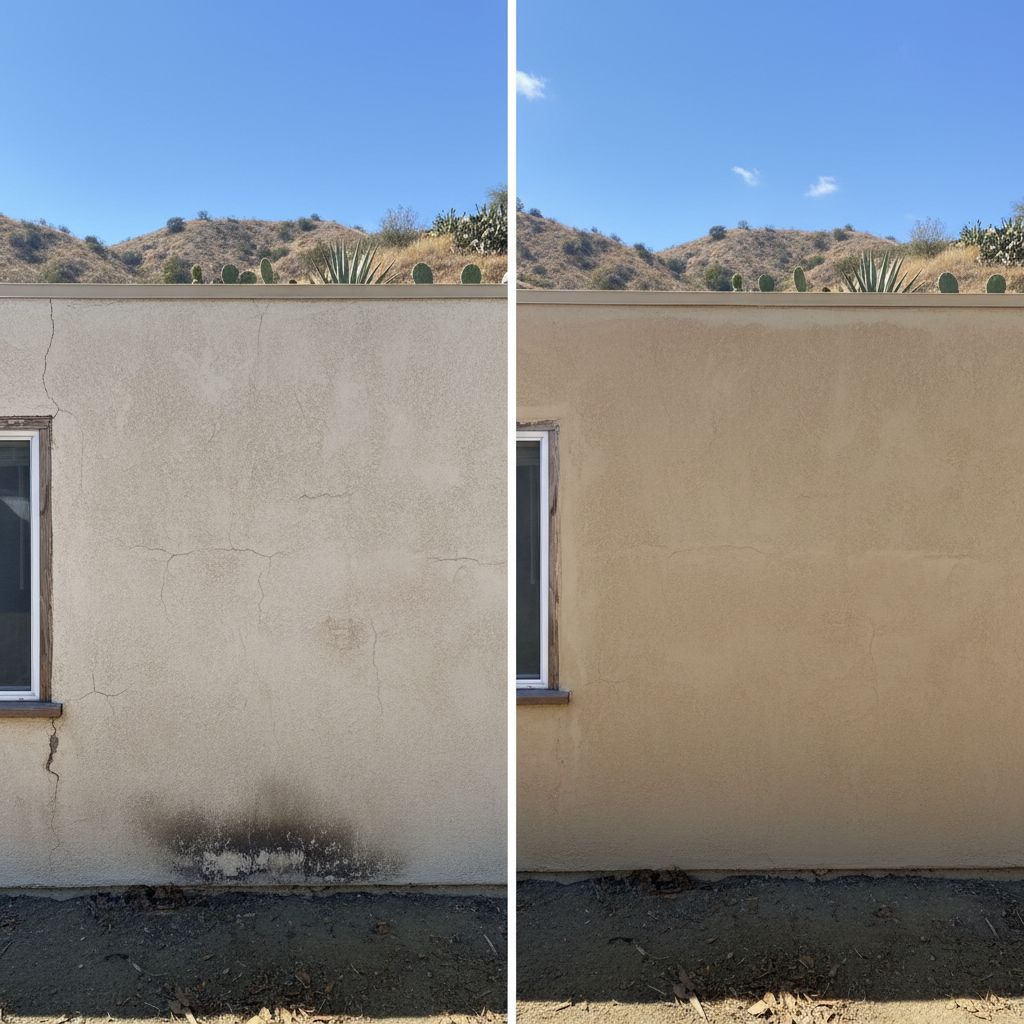
Your stucco's seen better days, huh? Maybe you've got some cracks, bubbling, or just a tired, faded look. When it's time to fix it, homeowners in El Cajon usually face a big question: do I just patch up the bad spots, or do I go for a full resurfacing job? It's a common dilemma, and frankly, as someone who's been doing this for years with El Cajon Stucco & Plastering, I've seen both approaches work – and fail – depending on the situation.
Patching: The Quick Fix
Patching is exactly what it sounds like. We find the damaged areas – maybe a section where water got in, or a big crack from a settling foundation – and then we cut out the bad stucco. Next, we repair the substrate if it needs it, apply new lath, a scratch coat, a brown coat, and finally a finish coat to just that section. It's kind of like putting a band-aid on a wound.
The Good About Patching:
- Cost-Effective Upfront: This is usually the cheapest option initially. You're paying for less material and less labor because we're only working on specific areas.
- Faster Turnaround: A patch job can often be done in just a few days, depending on the size and how many repairs are needed. You won't be looking at weeks of work.
- Less Disruptive: We're not tearing off your entire exterior, so there's less mess and less impact on your daily life.
The Not-So-Good About Patching:
- Color Matching Headaches: This is the biggest one, trust me. Even with our best efforts, matching new stucco color to old, weathered stucco is incredibly difficult. It almost always looks like a patch. The old stucco has faded over years from our intense El Cajon sun, and new stucco just won't have that same aged look.
- Potential for Future Problems: If the damage is widespread or due to an underlying issue that isn't fully addressed, new problems can pop up right next to the patch. You might end up chasing repairs for years.
- Short-Term Solution: Unless the damage is very minor and isolated, patching often feels like a temporary fix. It doesn't really rejuvenate the whole house.
Full Resurfacing: The Fresh Start
Full resurfacing means we're applying a brand new finish coat right over your existing, structurally sound stucco. We'll clean the old stucco, make any necessary minor repairs to cracks or small holes, then apply a bonding agent and a new layer of finish coat over the entire exterior. Think of it like giving your house a whole new skin.
The Good About Full Resurfacing:
- Uniform Appearance: This is where resurfacing truly shines. You get a completely consistent color and texture across your entire home. No more mismatched patches. It looks like a brand new house!
- Enhanced Curb Appeal: A fresh, uniform stucco exterior significantly boosts your home's aesthetic. It's a great way to modernize the look without the full expense of a tear-off.
- Improved Durability (Often): The new finish coat adds another layer of protection against the elements. This is especially great for homes in areas like Winter Gardens that get a lot of sun exposure and temperature swings. It can help seal minor hairline cracks and provide a fresh barrier.
- Longer-Term Solution: This approach gives your home a renewed lifespan for its exterior, pushing off the need for major repairs for many years.
The Not-So-Good About Full Resurfacing:
- Higher Upfront Cost: Yes, it's more expensive than just patching. You're covering the entire house, so there's more material and labor involved.
- Longer Project Time: It takes longer to prep and apply a new finish coat to the whole house compared to a few small patches.
- Doesn't Fix Major Structural Issues: If your stucco has widespread structural damage, significant water intrusion, or delamination, resurfacing isn't enough. You'd need a full tear-off and re-stucco in those cases. Resurfacing assumes the underlying stucco is mostly sound.
My Recommendation for El Cajon Homeowners
Look, if you've got just one or two small, isolated cracks that aren't getting worse, and you're okay with a potential color mismatch, a patch might be fine. But for most homeowners I work with in El Cajon, especially if you're planning to stay in your home for a while or thinking about selling in the next few years, I almost always recommend full resurfacing.
Why? Because of the color matching issue, mostly. You'll spend money on patches that just stand out and make your house look like a patchwork quilt. A full resurface gives you that clean, consistent, 'brand new' look that really makes a difference. It's an investment that pays off in curb appeal, protection, and your own satisfaction every time you pull into your driveway.
Before you decide, it's always best to have a professional come take a look. We can assess the condition of your existing stucco and give you an honest opinion on what's truly needed. Sometimes, what looks like a small problem can be a sign of something bigger, and sometimes a big problem can be fixed with a smart resurface. Give us a call at El Cajon Stucco & Plastering, and we'll help you figure out the best path forward for your home.