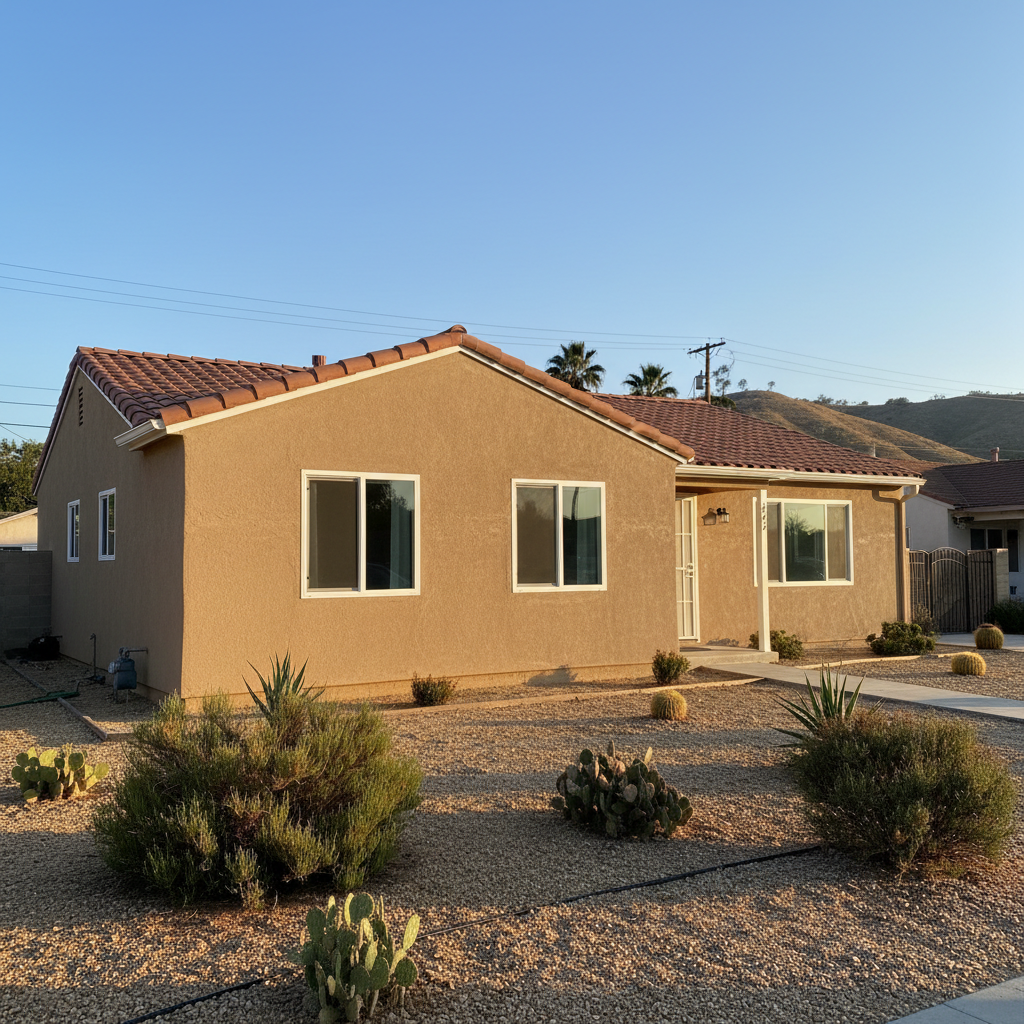
What's the Deal with Stucco Pricing?
So, you're thinking about stucco for your place here in El Cajon, right? Maybe it's a brand new build, or you're just sprucing up an older home. One of the first things folks always ask me is, "What's this actually going to cost?" And honestly, I get it. You want a straight answer, not some vague "it depends" mumbo jumbo. While there are definitely a lot of moving parts, I can give you a pretty good idea of what to expect and what makes those numbers jump around.
I've been in this business a long time, seen everything from tiny patch jobs to big custom homes in spots like Fletcher Hills. The cost of stucco isn't just about the material itself, you know? It's about the labor, all the prep work, the specific system we use, and even how easy (or hard!) it is to get to your walls. You're not just paying for stucco; you're paying for a skilled crew, an installation that's done right and will last, and a finish that looks fantastic for years.
The Big Factors That Drive Stucco Prices
Okay, let's really dig into what affects the final bill:
- Square Footage: This one's pretty obvious. More wall space means we need more material and more hours of labor. We measure the actual wall surface that gets stucco, not just your home's footprint.
- Type of Stucco System:
- Traditional 3-Coat (Cement Stucco): This is the classic, super durable stuff we've been using for decades. It usually takes a bit more work to apply than synthetic, but the material itself often costs less per square foot. It's truly solid.
- Synthetic Stucco (EIFS - Exterior Insulation and Finish System): This is a multi-layer system that includes insulation. It's awesome for energy efficiency and gives you more design options, but it generally costs more upfront. You're paying a premium for that extra insulation and the specialized installation it needs.
- One-Coat Stucco: A newer choice that goes on faster, often with a fiberglass mesh. It's a decent middle-ground for certain projects, but it doesn't always fit every application or climate.
- Condition of Existing Walls: If we're going over old siding, brick, or stucco that's already damaged, there's a lot of prep work to do. Removing old material, fixing sheathing, or putting down a proper base coat — all of that adds to the cost. If your walls are already clean and ready, that saves both time and money.
- Architectural Complexity: Straight, flat walls are a breeze, honestly. But if you've got lots of corners, arches, columns, intricate details, or high gables? That means more cutting, more flashing, more scaffolding, and more detailed handwork. It just takes longer and needs more skill, so it costs more.
- Finish Texture: A super smooth finish, like Santa Barbara or Venetian, is harder to get just right and takes more time and skill than, say, a heavy dash or sand finish. The smoother you want it, the more labor it generally requires.
- Accessibility: Can we get our equipment and materials right up to the house? Or do we need to haul everything around a tight backyard, over landscaping, or up multiple stories? Scaffolding needs, cramped spaces, or working on steep hillsides all add to the labor cost.
- Color and Pigment: Standard colors are usually included. But if you want a custom color match or a really deep, rich tone, that might add a little extra to the material cost.
Typical Cost Ranges for Residential Stucco in El Cajon
Alright, let's talk actual numbers. Keep in mind these are just averages for our area, and your specific project could be higher or lower depending on all those factors I just mentioned. These prices usually cover materials, labor, and basic prep.
- Traditional 3-Coat Stucco: For a standard, fairly simple home, you're generally looking at $8 to $15 per square foot. So, a 2,000 sq ft house with 1,500 sq ft of wall surface might run you $12,000 to $22,500.
- Synthetic Stucco (EIFS): This system typically starts higher, often in the range of $12 to $25 per square foot. That same 1,500 sq ft of wall could be $18,000 to $37,500. The energy savings can help offset some of that over time, especially with our hot El Cajon summers.
- One-Coat Stucco: This often falls somewhere in the middle, around $9 to $18 per square foot, depending on the specifics.
These ranges are for a complete re-stucco or a new installation. Small repairs or patching will be quoted differently, often as a flat rate or hourly, depending on what's needed.
What Should Be in Your Stucco Quote?
When you get a quote from El Cajon Stucco & Plastering, or any decent contractor, it should be clear and detailed. Here's what you really want to see:
- Scope of Work: A clear description of what's being done – for example, 'Install new 3-coat stucco system over existing plywood sheathing on exterior walls.'
- Materials: What type of stucco, brand (if they use one), and the finish texture.
- Prep Work: Details on how they'll prepare the surface, flashing installation, weep screeds, corner beads, and any necessary repairs to the stuff underneath.
- Labor: The cost for the crew, including supervision.
- Cleanup & Debris Removal: Make sure they aren't leaving you with a huge mess.
- Warranty: What kind of guarantee do they offer on their work?
- Payment Schedule: Clear milestones for when payments are due.
- Total Cost: The final price, with no hidden fees.
A good quote won't just say 'stucco job - $X.' It'll break down the components so you truly understand what you're paying for.
How to Avoid Overpaying (and Underpaying)
You don't want to get ripped off, obviously, but you also don't want to hire the cheapest guy who's going to cut corners and leave you with problems down the road. Here's my advice:
- Get Multiple Bids: Three detailed quotes are usually enough. This helps you compare apples to apples. If one bid is drastically lower, be wary — they might be missing something important or using cheaper materials.
- Check References and Licenses: Always do this. Ask for proof of insurance, too. A contractor who can't provide these isn't worth your time, period.
- Understand the Scope: Make sure every quote covers the exact same work. One contractor might include new flashing around windows, while another just assumes you'll handle it. These differences really add up.
- Ask About Materials: Don't be afraid to ask what brands they use. There's a difference in quality, and better materials generally mean a finish that lasts longer.
- Don't Rush: Take your time to review quotes and ask questions. A good contractor will be happy to explain everything.
- Get Everything in Writing: Every detail, every cost, every agreement. This protects both you and the contractor.
Investing in stucco is a big deal for your home's appearance and how well it's protected. Do your homework, ask the right questions, and you'll end up with a beautiful, durable finish that adds value to your El Cajon property for years to come.